What Treasury announced on 10 June 2026
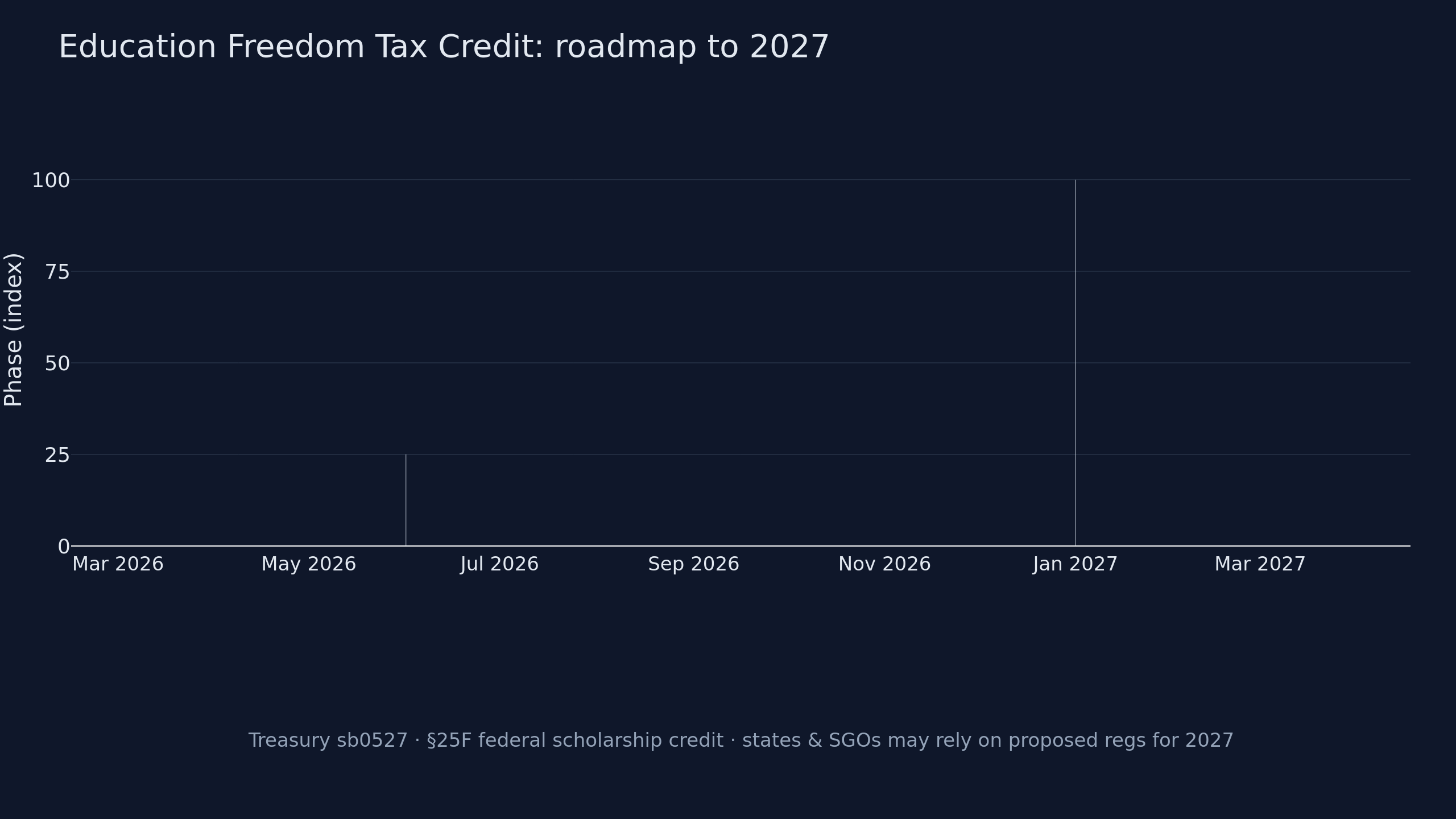
On 10 June 2026 the U.S. Department of the Treasury previewed forthcoming Treasury and IRS guidance to implement the new federal scholarship tax credit enacted as part of the Working Families Tax Cuts. The official release (Treasury sb0527) states that Treasury expects to issue proposed regulations by the end of September 2026 and that the Education Freedom Tax Credit (EFTC) is expected to launch in January 2027.
Pre-regulation signal: what the preview means
This is not yet binding law — it is an early regulatory signal ahead of formal rulemaking. Treasury indicated that states, scholarship-granting organizations (SGOs), taxpayers and other stakeholders should be able to rely on the proposed regulations for tax year 2027. The guidance will cover implementation, compliance, reporting and program integrity. Deputy Assistant Secretary for Tax Policy Kevin Salinger outlined key issues at a roundtable with SGOs, education stakeholders, technology providers and state representatives.
Legal framework: IRC section 25F
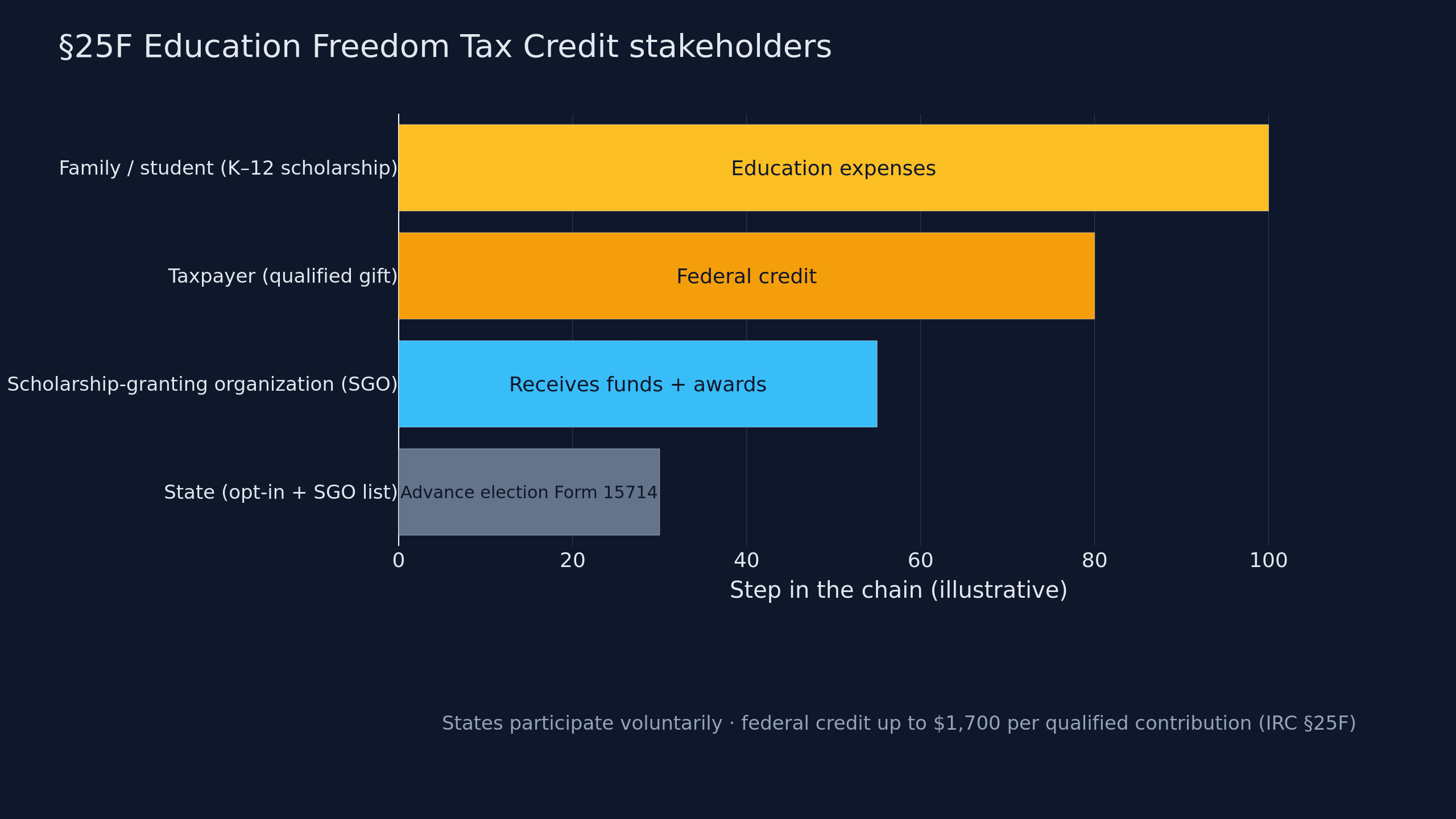
The credit sits in IRC section 25F, enacted under the One, Big, Beautiful Bill Act (Public Law 119-21). It is a nonrefundable federal income tax credit for qualified contributions to state-approved SGOs. The statutory amount reaches up to $1,700 per qualified contribution (dollar-for-dollar, subject to additional limits and requirements Treasury will spell out in guidance). It applies to taxable years ending after 31 December 2026; scholarship amounts received by students may be excluded from gross income under the statute.
Chart: roadmap to January 2027
State role: opt-in and SGO list
State participation is voluntary. A participating state must provide the Secretary of the Treasury with an annual list of SGOs meeting federal requirements and located in that state. From 1 January 2026 states may file Form 15714 (Advance Election to Participate Under Section 25F for 2027) under Rev. Proc. 2026-6 to signal intent before the final SGO list. Treasury will develop enforcement rules for IRC §25F subsections (d) and (g) and for recordkeeping and information reporting.
Chart: state → SGO → taxpayer → family chain
What to prepare now: SGOs, donors and state governments
SGOs should review federal eligibility requirements, scholarship controls and reporting systems ahead of 2027. Taxpayers should document qualified gifts and monitor credit limits. States must decide on opt-in, designate the official signing the election (typically the governor) and align SGO lists with existing state scholarship programmes. Treasury also published an Education Freedom Tax Credit Fact Sheet.
Key dates and next steps
Illustrative milestones: 1 Jan 2026 — Form 15714 window opens; 10 Jun 2026 — Treasury preview; late Sep 2026 — proposed §25F regulations; Jan 2027 — first year taxpayers and SGOs operate with the federal credit. Monitor the Federal Register, comment on proposed rules and align state education and tax policy.
Who should follow this
Governors and state education/finance departments, SGOs and scholarship foundations, individual and corporate donors, private and homeschool providers, tax/education software vendors, and advisers already managing state tax-credit scholarship programmes.
Conclusion: certainty ahead of the 2027 start
The 10 June 2026 announcement confirms Treasury’s focus on certainty for states, SGOs, taxpayers and families before the Education Freedom Tax Credit goes live. The decisive step will be the proposed regulations due by end-September, which stakeholders may rely on for 2027. Source: U.S. Department of the Treasury — Treasury Previews Education Freedom Tax Credit Guidance (sb0527).