What was published and how long you have to respond
On 16 June 2026 HM Revenue & Customs (HMRC) published the technical consultation «Transfer Pricing: International Controlled Transactions Schedule (ICTS)». This is an official consultation, not market rumour: it includes draft regulations, a draft HMRC notice, the 2026 ICTS template and a proposed penalty regime. It remains open until 11:59pm on 31 July 2026. Responses should be emailed to tp_scope_and_documentation@hmrc.gov.uk.
What the ICTS is and why it matters
The International Controlled Transactions Schedule (ICTS) is a new annual filing requirement for information on international controlled transactions (transactions meeting the transfer pricing or permanent establishment condition). HMRC will use the data for automated, data-led risk assessment, more accurate transfer pricing risk identification and shorter, better targeted enquiries for compliant groups. Stated aims: improve fairness (profits aligned with UK activity) and compliance efficiency.
Effective date: periods beginning on or after 1 January 2027
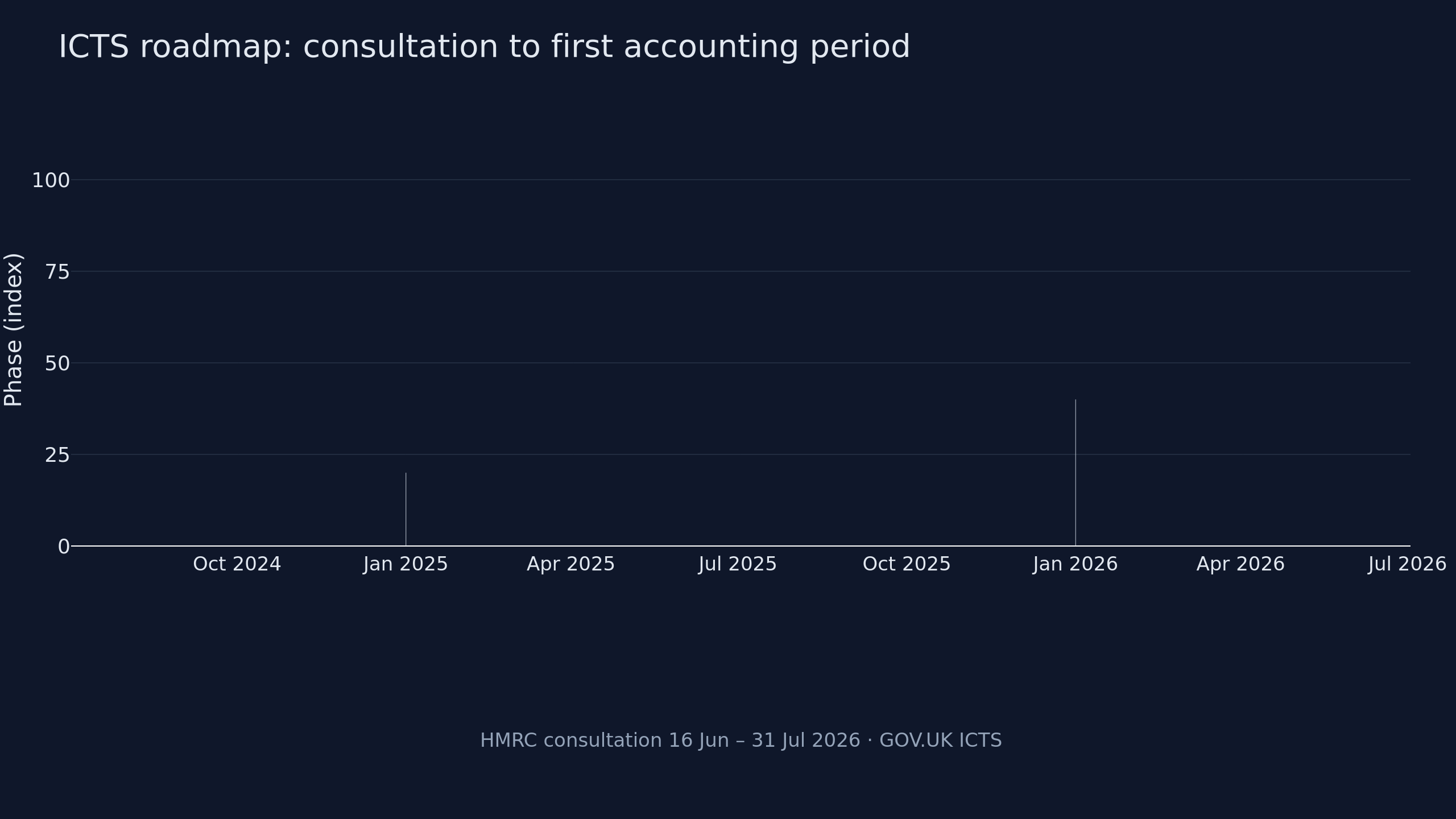
The government announced ICTS at Budget 2025. Finance Act 2026 (section 48) gave HMRC powers to make regulations. This consultation sets out the detailed design. The intention is that ICTS applies for accounting periods beginning on or after 1 January 2027. The statutory instrument is expected in late 2026, with the HMRC notice by year end.
Chart: ICTS roadmap
Who is in scope
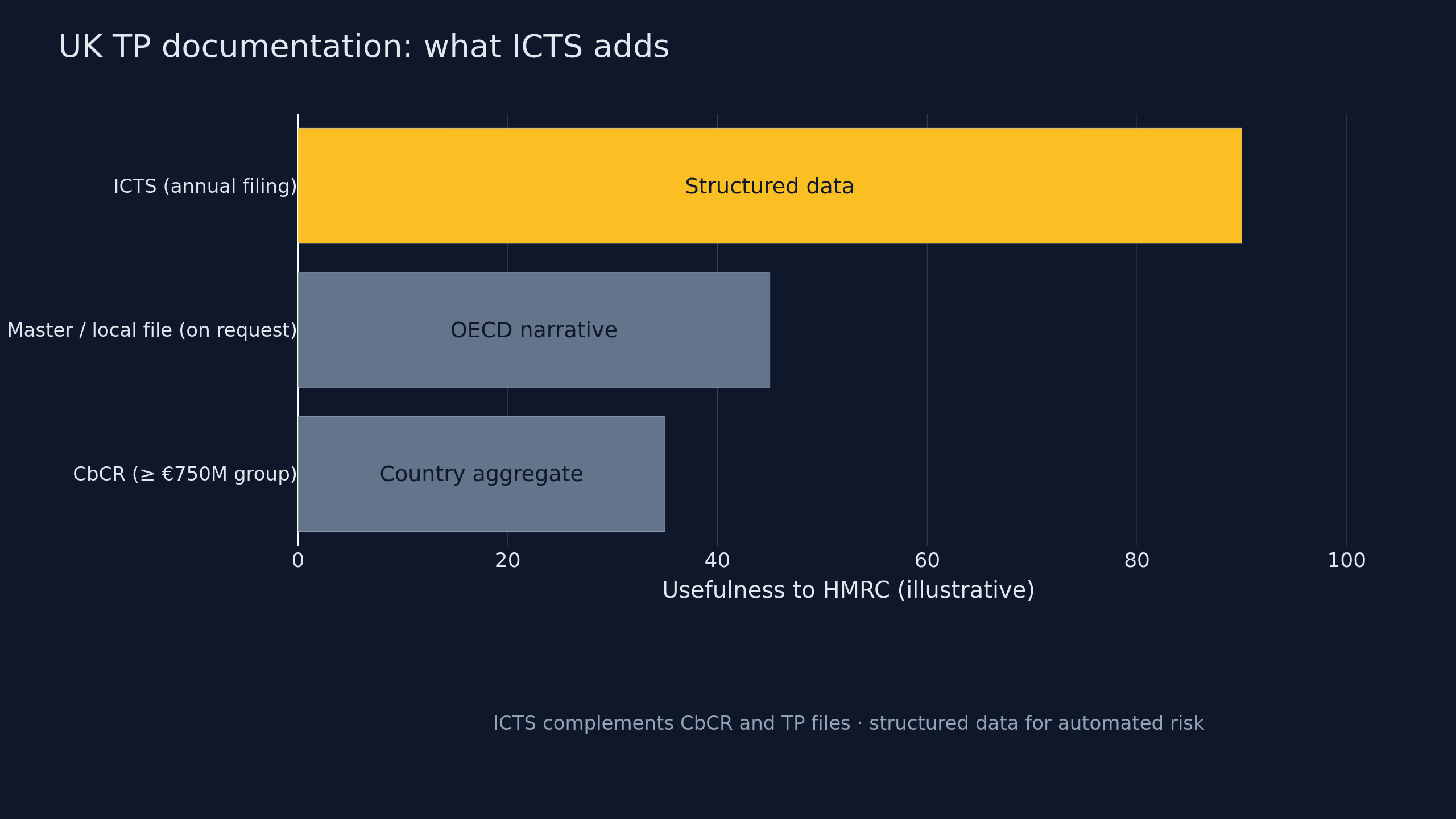
In-scope multinationals under UK transfer pricing legislation (Part 4 TIOPA) or permanent establishment rules should read this, along with advisers, law firms and representative bodies. ICTS does not replace CbCR or master/local files on request: it complements them with structured data suitable for large-scale analysis. There are materiality thresholds, exemptions (e.g. SME relief, in-force APAs) and targeted rules for financial services.
Chart: ICTS vs CbCR and master/local file
What the draft 2026 template asks for
The revised template (vs the 2025 consultation) aggregates by transfer pricing policies and comparability analysis rather than one row per counterparty. It covers non-financial transactions (Section A), loan relationships and derivatives (Section B), and financial services simplifications (Sections A(i) and B(i)). HMRC’s example: 50 IT service rows to group affiliates become one aggregated line with top 10 counterparties where relevant.
Penalties and soft landing
Draft Part 3 sets out penalties broadly aligned with Country-by-Country Reporting and the Transfer Pricing Records Regulations 2023. HMRC expects a soft landing for early filings through its interpretation of reasonable excuse, giving businesses time to adapt. Process, data and governance should still be prepared well ahead of 2027.
What to do now if you are CFO, TP lead or adviser
Review the draft regulations, notice and ODS template. Map your SICTs (Specified International Controlled Transactions) against proposed thresholds. Assess impact on ERP, tax technology and the UK compliance calendar. If you rely on APAs or ICAP, check exemptions and possible changes. Respond before 31 July 2026 if you want to shape the final design.
Conclusion: more data-driven UK transfer pricing reporting
The 16 June 2026 consultation confirms the UK is moving to structured annual transfer pricing reporting, effective for periods from 1 January 2027. It is one of the most significant UK tax developments for multinational groups with cross-border related-party flows. Source: GOV.UK — Transfer Pricing: International Controlled Transactions Schedule.